
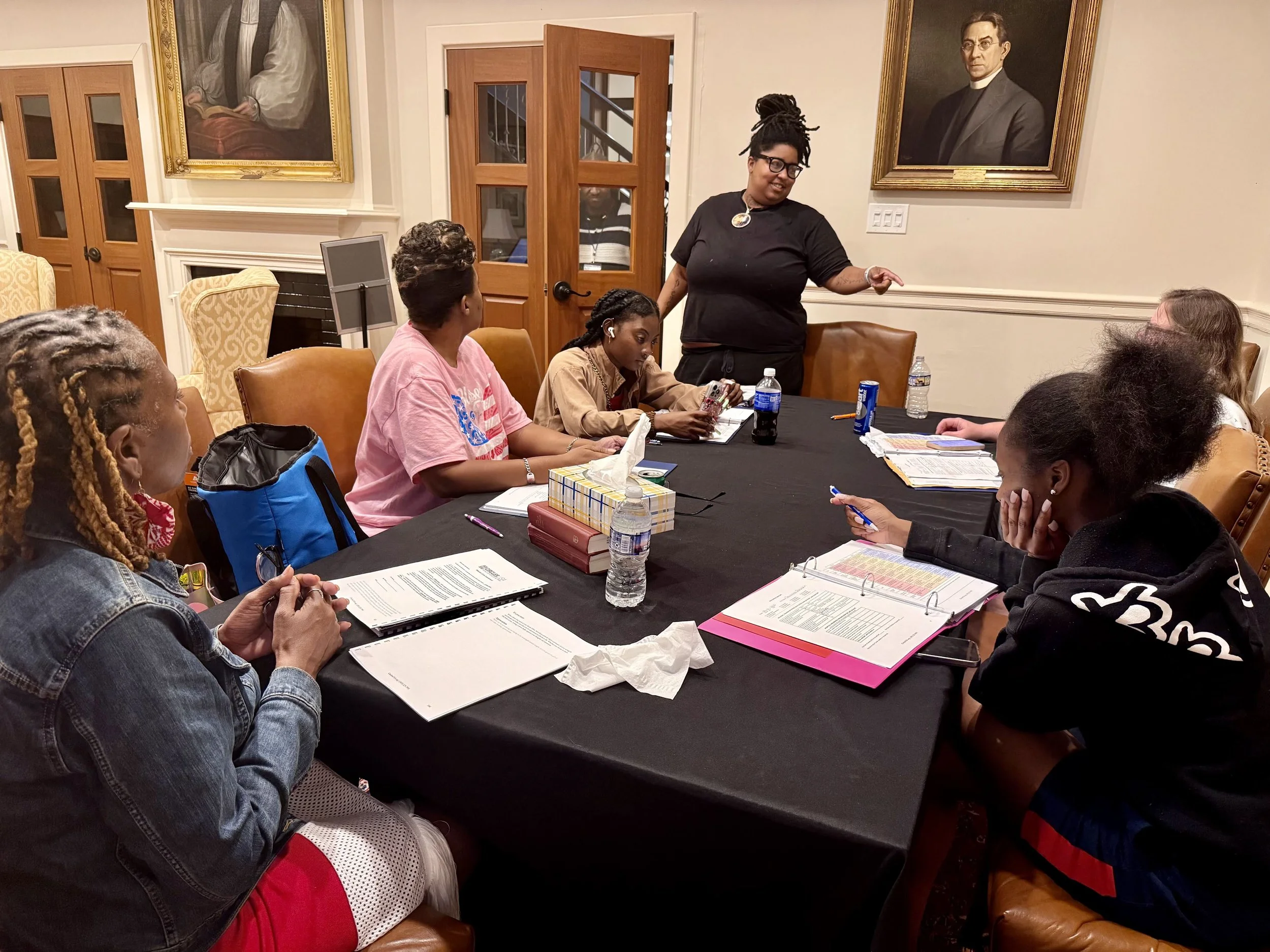
Circles is a nationally-proven and innovative way of connecting people across socioeconomic lines in an effort to move individuals and families out of poverty. Circles is not just another program to manage poverty. Circles is uniquely designed to reduce poverty by helping low-income individuals expand their social capital while bringing the community together in solidarity to reduce the barriers to keeping people in poverty.
The Circles Model
How it works.
A Circle is made up of a Circle Leader (individual or family moving out of poverty) and 2-3 Circle Allies (middle or upper-income volunteers) who come alongside the Circle Leader to support them in achieving their goals.
Prior to forming a Matched Circle group, all potential Circle Leaders and Allies complete multi-week training that prepare them for the Circles process.
Circle Leaders learn about goal setting, personal finance, the trauma of poverty, cross-class and intercultural relationship development, conflict management, and workplace communication skills.
Allies focus on increasing their Poverty IQ, with topics to illuminate systemic barriers, the correlation between poverty and race, gender, and trauma, and the differences between generational and situational poverty.
After successfully completing training, Circle Leaders are matched with their Allies and begin meeting weekly for social support, skill development, goal progress monitoring, and community building.
This continues for a minimum of 18 months.